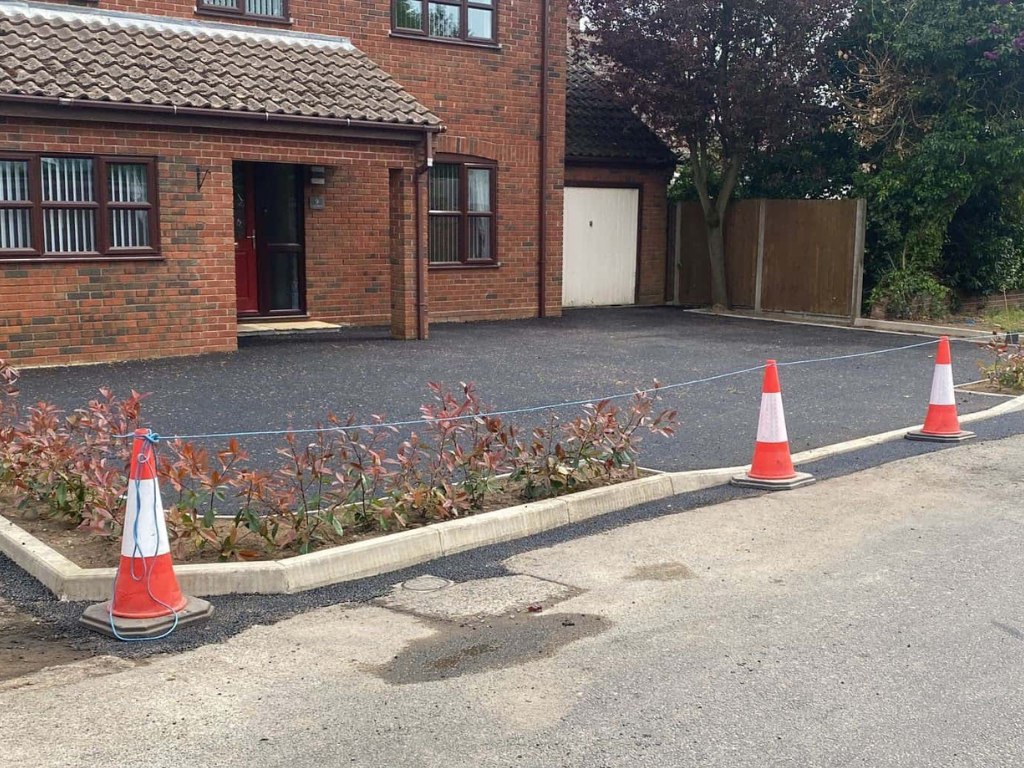
Why Proper Joint Construction Matters When Extending a Tarmac Driveway
Extending an existing tarmac driveway is a practical way to create additional parking space or improve access around a property. However, achieving a durable and visually consistent finish involves more than simply laying new tarmac alongside the existing surface. One of the most important aspects of the work is how the joint between the old and new sections is constructed.
A poorly formed joint can become a weak point, allowing water to penetrate, creating uneven edges and increasing the likelihood of deterioration. For homeowners considering a driveway extension in Milton, Cambridgeshire, understanding the importance of proper joint construction can help ensure the finished surface performs as intended.
Why the Joint Between Old and New Tarmac Matters
When a driveway is extended, the new tarmac needs to connect securely with the existing surface. The junction is particularly important because the two sections may have been laid at different times, with different levels of wear and potentially different underlying conditions.
If the connection is not prepared correctly, the joint may become visible or develop movement over time. Vehicle traffic places repeated pressure on this area, particularly when cars turn, brake or cross the junction at an angle.
A properly constructed joint helps create a more continuous surface, reducing the risk of separation and supporting the overall stability of the extended driveway.
Preparing the Existing Tarmac Edge
The condition of the existing driveway edge has a direct influence on the quality of the finished joint. Simply laying new material against a worn, loose or uneven edge is unlikely to produce a reliable connection.
Before the extension begins, the existing tarmac should be assessed to identify cracks, crumbling sections or areas that have started to break away. Any unsuitable material needs to be removed so that the new surface can meet a sound, stable edge.
The edge may also need to be cut back to create a clean and well-defined line. This provides a more suitable connection point and helps prevent loose material from weakening the junction.
Creating a Strong Connection Between the Surfaces
A successful joint requires careful preparation and correct installation techniques. The new tarmac must be placed and compacted so that it connects closely with the existing surface, without leaving gaps or poorly supported edges.
Where appropriate, a suitable bituminous jointing treatment can help improve the bond between the two sections and reduce the risk of water entering the connection. The precise approach will depend on the condition of the existing driveway and the type of surfacing being installed.
Compaction is equally important. If the material around the joint is not properly compacted, it may remain weaker than the surrounding driveway. This can lead to cracking, movement or gradual separation as vehicles repeatedly pass over it.
Why Poor Joint Construction Can Lead to Water Ingress
Water penetration is one of the main concerns when extending a tarmac driveway. Even a relatively small gap along the joint can allow rainwater to reach the layers beneath the surface.
Over time, moisture can weaken the supporting foundation, particularly if water becomes trapped or the ground beneath the driveway is already vulnerable. During colder conditions, repeated freezing and thawing can contribute to further deterioration.
A properly sealed and constructed joint helps limit these risks. However, joint treatment alone is not enough. The driveway must also have suitable drainage and surface falls to prevent water from collecting around the connection.
Matching the Levels of the Existing and New Driveway
The finished extension should connect smoothly with the original driveway. Differences in surface height can create an uncomfortable transition, interfere with vehicle access and make the joint more vulnerable to damage.
Before laying the new tarmac, the existing surface levels should be assessed alongside the proposed finished height. The underlying materials and preparation depths must be planned accordingly so that the new section does not finish noticeably higher or lower.
A smooth transition also improves the appearance of the driveway. This is particularly important where the extension is intended to look like a natural continuation of the original surface rather than a separate addition.
The Importance of a Stable Foundation
Even a carefully constructed joint can deteriorate if the ground beneath the extension is not properly prepared. The new driveway section needs a suitable foundation that can support vehicle loads and provide consistent support across the entire surface.
If the sub-base is weak, uneven or inadequately compacted, movement may occur near the junction. This can place additional stress on the connection and eventually cause cracking or separation.
Proper ground preparation, appropriate sub-base materials and thorough compaction all contribute to a more reliable extension. The condition of the existing driveway should also be considered to ensure the new section is not connected to an area that is already unstable.
Professional Tarmac Driveway Extensions in Milton, Cambridgeshire
Extending a tarmac driveway successfully requires attention to the details that are not always obvious once the work is complete. Preparing the existing edge, creating a secure joint, matching surface levels and ensuring a stable foundation all contribute to the long-term performance of the finished driveway.
Milton Driveways can help homeowners in Milton, Cambridgeshire, plan and install tarmac driveway extensions with careful consideration of the existing surface and the requirements of the new section. A professional assessment can identify potential issues before installation begins and help determine the most suitable approach.
Conclusion
Proper joint construction is essential when extending a tarmac driveway because the connection between the old and new surfaces can influence durability, drainage and overall appearance. Careful edge preparation, effective bonding, accurate level matching and a stable foundation all help reduce the risk of future problems.
If you are considering extending your driveway in Milton, Cambridgeshire, contact Milton Driveways to discuss your requirements and arrange an assessment. A well-planned extension can provide a practical, seamless addition to your existing driveway.
Call us on: 01223 857 079
Click here to find out more about Milton Driveways
Click here to complete our contact form and see how we can help with your driveway needs.